

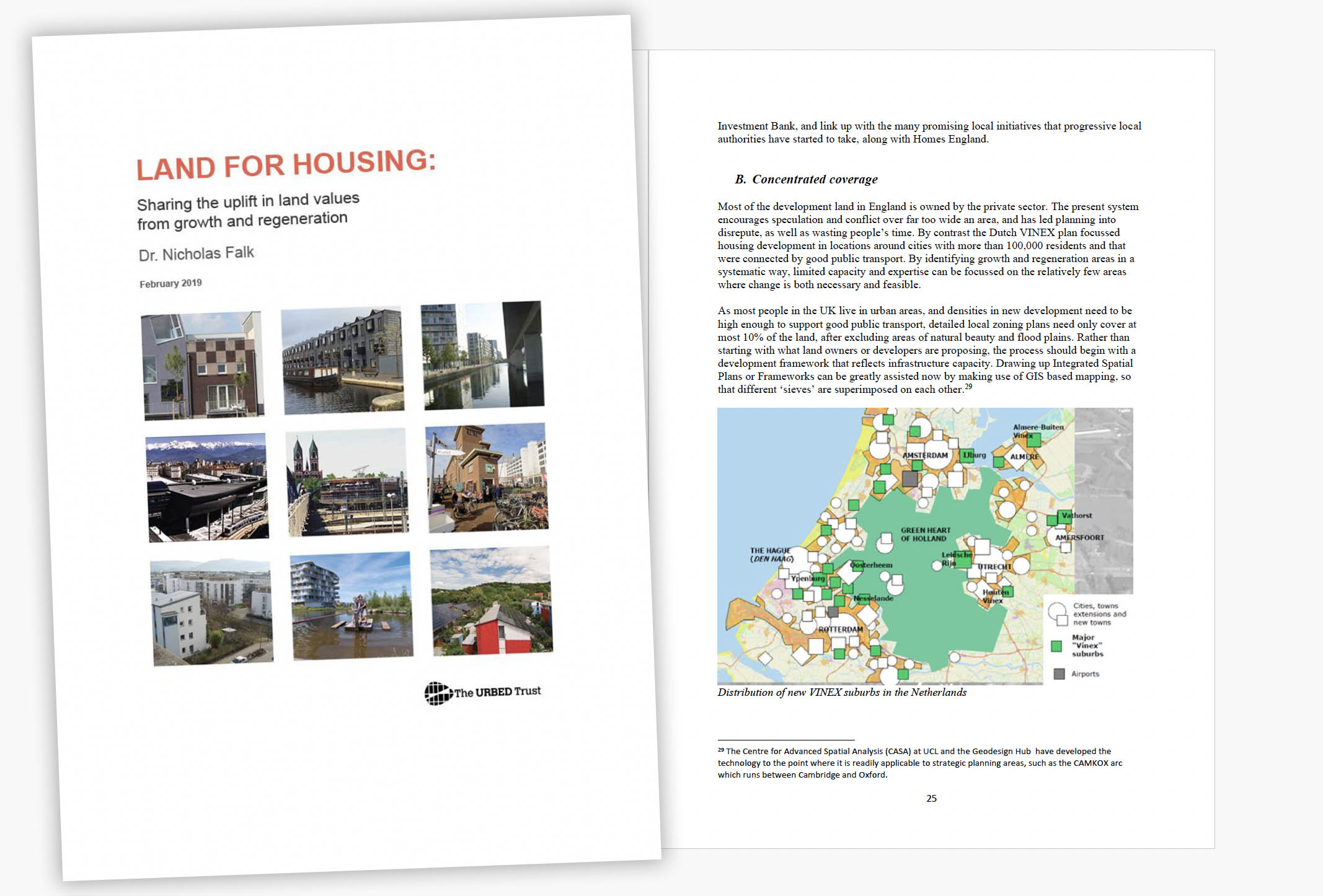
The UK needs to get a lot smarter in the way it uses public finance if the government’s ambitions are to be realised. Back in 2019, John Healey asked me to prepare a report for him on Land for Housing, drawing lessons from German and Dutch experience. I wrote up seven case studies that offered replicable lessons, especially regarding how the public and private sectors could collaborate.
Since then despite a flood of good advice, the situation has got much more difficult. Now that Labour is changing the way we do planning and is devolving powers it is vital that HM Treasury uses all the powers at its disposal and acts as a motor, not just a brake. The big question now is how to make development viable at a time when costs have escalated, values are generally uncertain, and a very different housing model is required. Here are some places where useful lessons could be learned.
The most spectacular is Kings Cross with its Knowledge Quarter where former railway land has been transformed – the process took some 40 years. In great Northern cities in places such as Victoria North in Manchester a dynamic Chief Executive used public private partnerships. Andy Burnham has started to roll out this philosophy for the country.
Progress in former industrial areas such as Ancoats, a short walk from Manchester Piccadilly Station, often required gap funding on a large scale. But gap funding was frequently a loan to overcome short term peaks in construction cashflow, not a grant. It ended because of a potential conflict with EU rules on State Aid, but these no longer apply. Could a similar process of infrastructure-led development apply to smaller towns and cities?
Some models
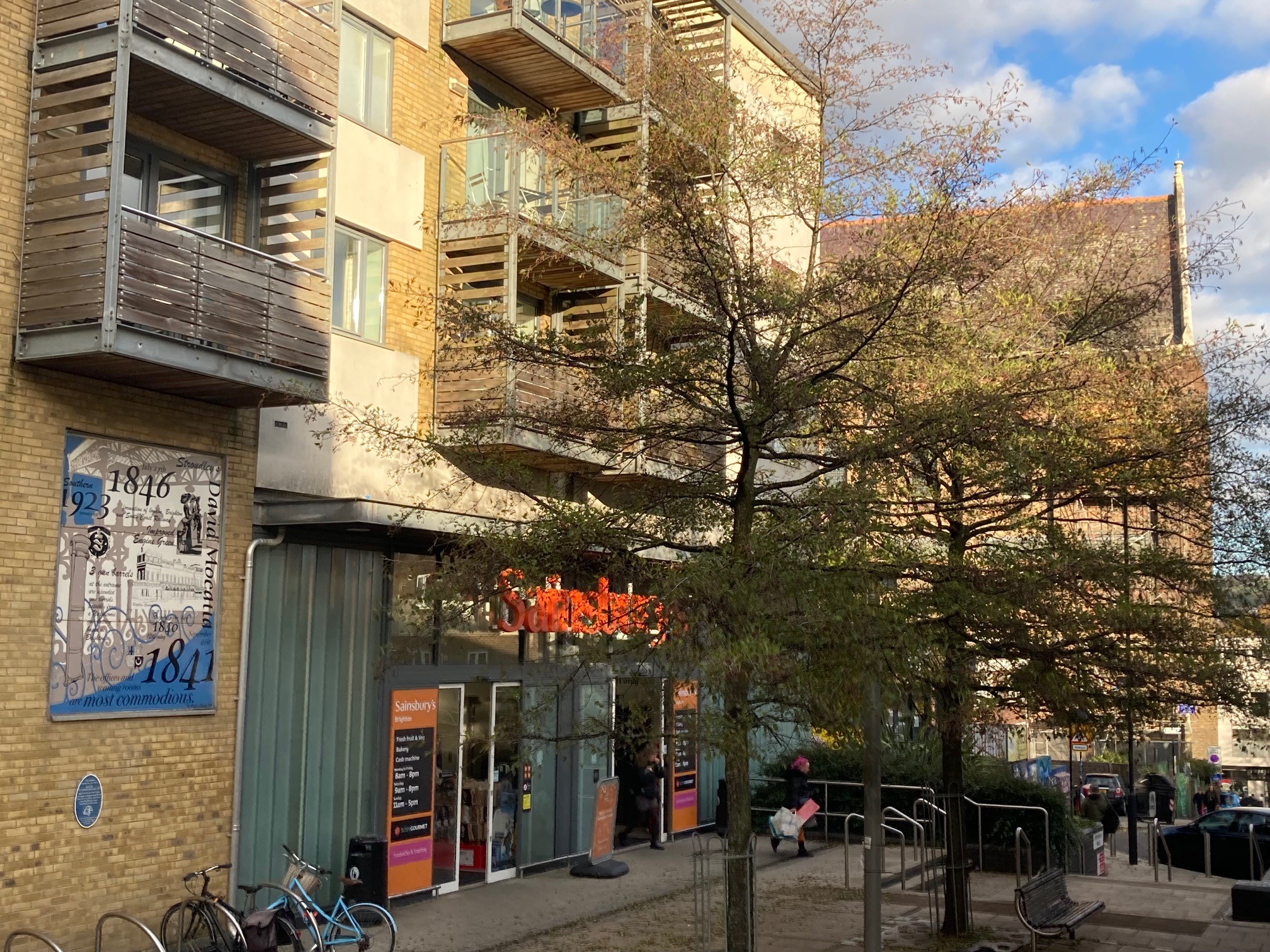
The development of land next to Cambridge Station attracted Microsoft to move from a peripheral science park to a stylish mixed use quarter by the station. In Brighton the 20 ha. New England Quarter has been developed on former railway land next to Brighton Station to an URBED masterplan. Nottingham’s innovative parking levy unlocked investment in a Continental style tram system that links up the main station with the rest of the city. It is one of several metro schemes that could have been part-funded from the uplift in land values.
Yet in many historic cities like Oxford and Gloucester or York, which are also important railway junctions, the stations are still bordered by under-used property and neglected public spaces owned by public bodies. On a larger scale in run-down town centres all over the country, local councils own buildings that could offer the space for innovation and creativity. Surely this is where some creative funding could get building going again?
Keys for the Treasury
Here are five straightforward steps that lie within the Treasury’s sphere of influence to unlock the opportunities:
1. Engage communities in prioritising improvements
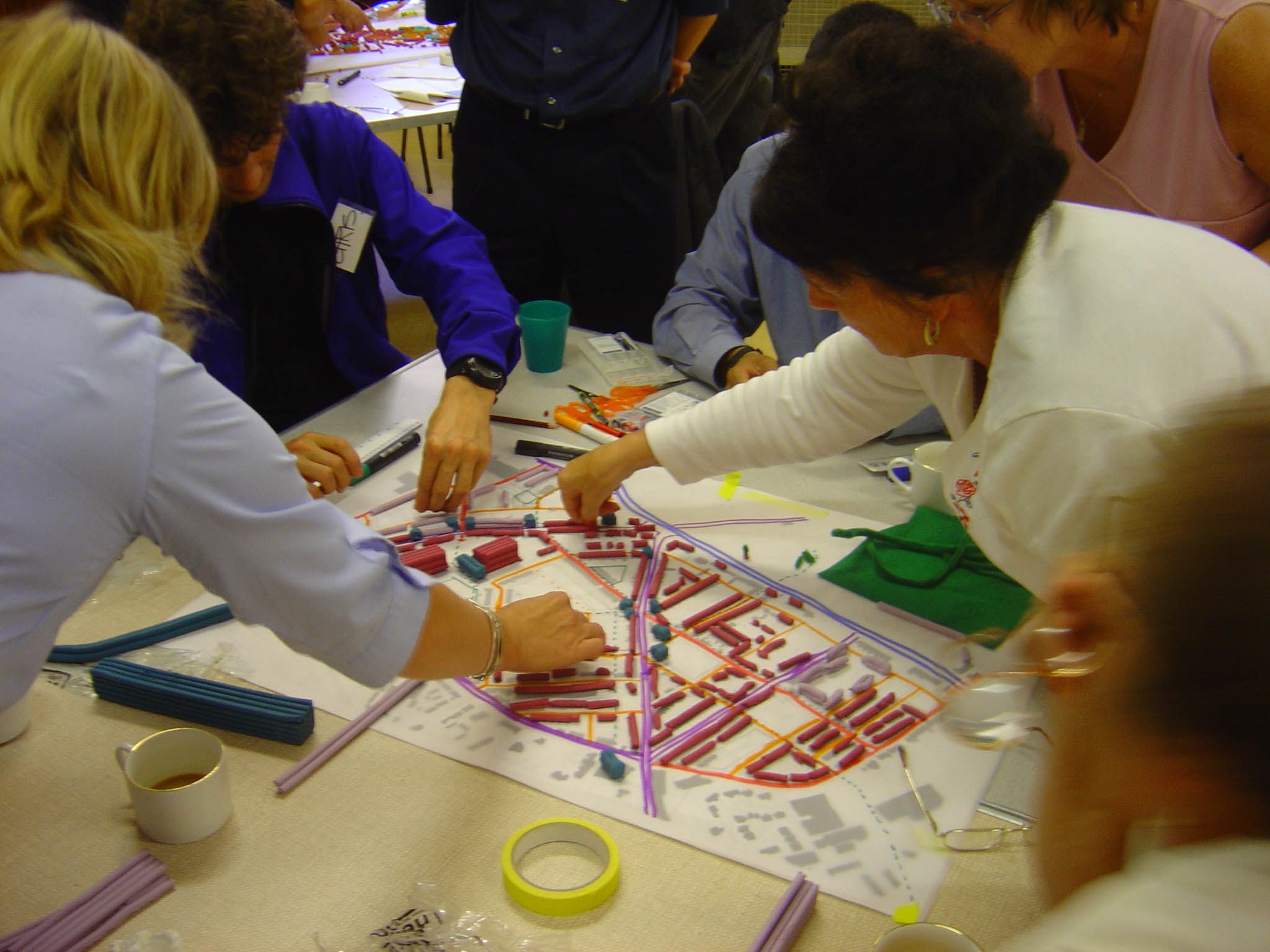
The first step is to turn potential opposition or complacency into support. A Community Wealth Fund to back local initiatives would complement the National Wealth Fund. Residents and businesses are often best placed to identify the factors stopping their towns from doing better. Instead of being sold on the open market, heritage buildings and land should be transferred to local trusts on terms that secure best value, a role that Lisa Nandy at the Culture Ministry could assist. The resulting improvements to public health and wellbeing should more than offset the costs.
2. Mobilise publicly owned land
Government must ensure that bodies such as the railways, water boards and local councils are not sitting on surplus land that could be put to better use. Regrettably the British tax system reinforces inequalities because it is biased towards the interests of property owners and penalises risk taking. The Treasury needs to commission a review of property taxes not just to make them fairer, but also to incentivise owners to invest. The Mirrlees Review back in 2010 provides a good place to start. The Treasury should use its arms, such as the National Infrastructure and Service Authority (NISTA) and Platform 4, to back up local initiatives and to make Land Assembly Zones work.
3. Target investment through Spatial Growth Strategies
Often the vision needs to span an arc, such as along a railway line. Local authorities are required to develop Spatial Development Strategies which cross administrative boundaries. While confidence in the private market is low, investment in infrastructure should be concentrated in places where the potential for good growth is greatest. Digital Intelligence can help local authorities identify the best areas for growth, and create what we call Social Cities that work for everyone.
By defining the boundaries for development corporations the eventual uplift in land values could be shared through simple changes in property taxes as in other parts of Europe. The Treasury could learn how European state banks like the German KfW, the French Caisse Des Depots, and the Dutch BNG support local initiatives without investment coming up against self-imposed limits.
4. Raise funds for infrastructure through bonds
Instead of the government or house builders having to fund new infrastructure, bonds should be used to fund growth projects. Pension funds and insurance companies will invest in regeneration, as the transformation around Kings Cross illustrates, provided there is both vision and capacity to deliver results. Where land ownership is fragmented Development Corporations should be set up with the powers to overcome local differences along with the necessary expertise and incentives to deliver projects efficiently and effectively. A Municipal Investment Corporation like the Dutch BNG would enable Labour’s plans to be implemented without adding to public debt.
5. Rebuild local leadership
Finally we need to replace blockers with builders. British towns and cities flourished when people trusted public bodies. The move to Unitary Councils should help but there is a danger of local interests being ignored. In France there are some 33,000 Communes and local mayors play a key role. So the final step is to fund the training and extra staff needed to rebuild capacity. Networks like the Housing Learning and Improvement Network, which focuses on health and social care, can kindle ambition. Study tours can be remarkably cost-effective in forging alliances. Drawing on the knowledge of experienced practitioners who have been there and done it is the best form of knowledge transfer.
Conclusion
Former industrial cities may never recover their former employment. But by operating as a cluster of well-connected neighbourhoods they can flourish again as Social Cities. Conservative governments are blamed for our economic difficulties, but many of the problems stem from over-centralisation and reliance on the private market to fix what the state should be doing. The Starmer administration put a lot of effort into reforming planning but insufficient into rebuilding the capacity to deliver results efficiently. My final proposal to make devolution work is to move from central government vetting every project to some kind of Municipal Investment Corporation that can support good growth.
My Smith Institute report on Funding Housing and Local Growth proposed a body that can:
- distinguish the good projects from the bad ones, and channel more investment into locations where the conditions for long-term economic growth are right
- de-risk complex projects, for example only lend money where local authorities are committed to allocating appropriate sites, and providing the necessary soft infrastructure, such as schools
- take a longer-term perspective than the private sector, for example giving more weight to investments that reduce energy consumption and hence fuel bills (and carbon emissions) than a private investor would
- tap into private investment by demonstrating commitment on where development is to take place (and where it is not welcome)
- mobilise public investment by joining up public investments in local transport and energy solutions with related developments
- encourage collaboration between adjoining local authorities and utilities by supporting sound long-term investment plans
- and ultimately raise our levels of growth and wellbeing to those of comparable European cities and city regions by building the capacity to plan and act for the longer term.
Will John Healey take up the challenge to innovate?
Photo: Wikimedia Commons