

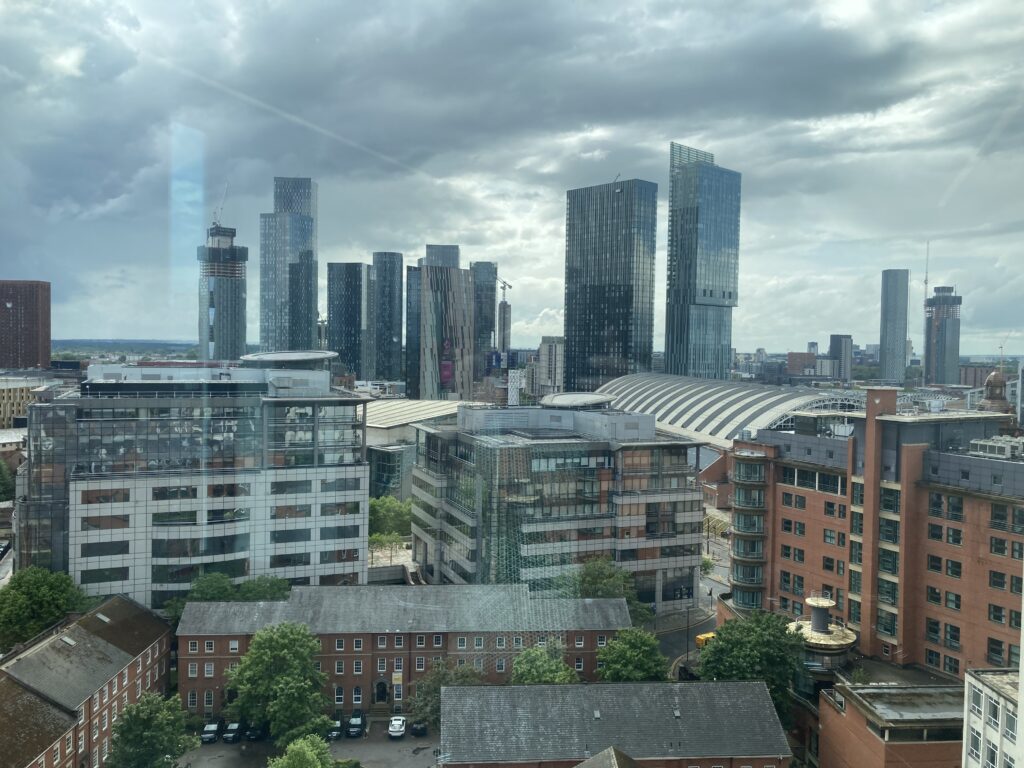
2026 is the year that everyone discovered the ‘economic miracle’ that is happening in Manchester, or should we say the ‘capital of the north’ with its own Number 10. It started with an article in Bloomberg in January where Jacob Reid wrote that hype about the city is not just ‘cocky Mancunians talking bullshit’ but rather the story of an economy that is growing at twice the national rate and that has attracted the highest level of foreign inward investment of any city outside London. Whatever you might think about tall buildings, Manchester’s skyline is the most visible symbol of this transformation. It now has 26 buildings over 30 storeys and 10 over 50 storeys and is set to become the fourth tallest city in Europe.
Given the UK’s need for economic growth, and now that Andy Burnham is our new Prime Minister, Manchesterism has become a matter for national debate. A plethora of article have followed seeking to understand, promote or discredit Manchesterism and arguing over who should take the credit. It is accepted that the city’s renaissance was well underway before Burnham became mayor and is largely down to a strange mix of municipal socialism, laissez faire planning and private capital brewed by the city council under Sir Howard Bernstein as chief executive and Sir Richard Leese as council leader.
URBED was based in Manchester for 30 years and had a ringside seat at the city’s transformation. We were involved in Hulme, the Northern Quarter and Ancoats as well as in Trafford, Bury, Oldham and Rochdale. We were also commissioned by the Combined Authority planners to develop a narrative for the Greater Manchester Spatial Framework.
However, truth be told, Howard Bernstein was suspicious of URBED. He worried about our independent voice and the fact that we appeared to have the ear of government through our work on Vital and Viable Town Centres and the 2002 Urban Summit. We never did win as much work in the city as we would have liked, although we did use Manchester as a test bed for much of our work and are well placed to understand what has happened in Manchester and what lessons it may hold. This is the story of URBED in Manchester.
URBED in Manchester
It all started in 1990 when I was recruited by Nicholas Falk to manage URBED’s Little Germany Action project in Bradford. I had been a planner working for Manchester City Council on the redevelopment of Hulme, but had seen Nicholas speak at a major urban regeneration conference in the late 1980s and decided that URBED was the place I wanted to work. I spent two years commuting over the Pennines to Bradford, but when the project came to an end I persuaded the URBED directors to let me work from home in Manchester.
At this time my main focus was a two year action research project for the Joseph Rowntree Foundation called 21st Century Homes. The idea was to explore the factors shaping the future of housing by following the design and construction of three live projects. One of these projects was the Homes for Change housing cooperative in Hulme with which I was also involved in as founder member and secretary. Homes for Change was planning a mixed-use building of 75 flats together with workspace, a shop, café, artists’ studios and a theatre. It was part of the City Challenge-funded regeneration of Hulme with the first phase opening in 1996 and the full building completed in 1999.
The 21st Century Homes report was launched at a conference in Manchester in the Summer 1995 at the time when Dave Lunts (who was one of the speakers) and Richard Leese were in a contest to become the new council leader after Graham Stringer’s election as an MP. In the report we proposed a new model for urban development that we called the Sustainable Urban Neighbourhood (SUN) a concept that now has its own Wikipedia page. We went on to secure funding from the Building Research Establishment to set up and run the SUN Initiative by which time we had moved into an office in the completed Homes for Change building.
A new approach
This was the pivotal moment in Manchester’s renaissance. The city had been devastated by postwar industrial decline, particularly in the textile industry. It had lost almost half of its population and its low point had been the early 1980s when few people could see a future for the city. The seeds of a new approach took root as part of the redevelopment of Hulme. Reputed to be the largest council estate in Europe, Hulme was designated as one of the government’s City Challenge areas and a public private partnership called Hulme Regeneration was established to oversee the redevelopment of the area.
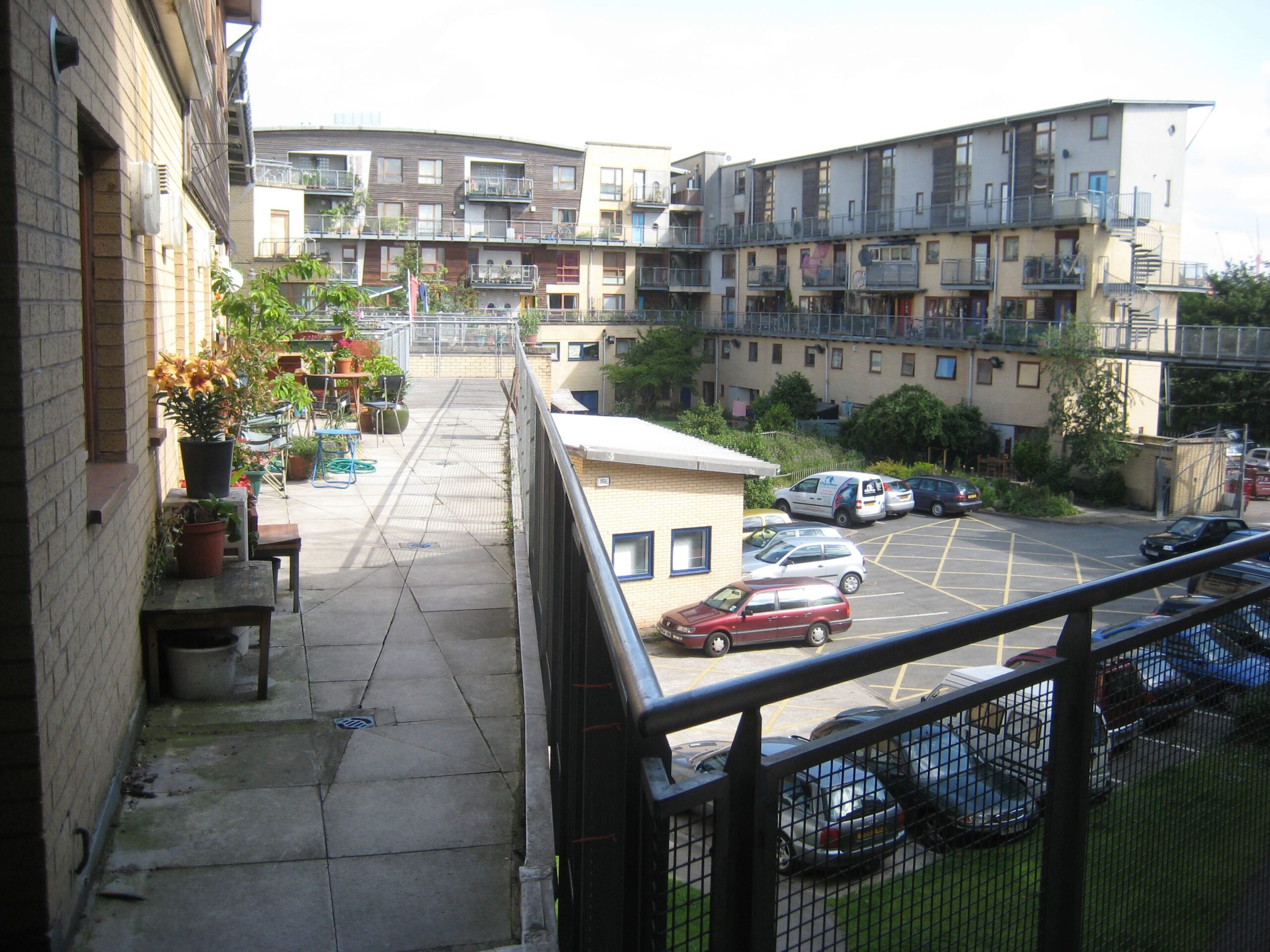
There was a lively debate about how Hulme should be rebuilt between those who wanted to create an urban neighbourhood and those who favoured a more suburban approach. Manchester had bid to host the Olympic Games as part of which the city leadership had visited Barcelona and were impressed by the regeneration that it had achieved. They did however come to an important realisation; that the cites like Barcelona were doing better than Manchester not because of their galleries or concert halls, but because of their urbanity. They resolved to make Manchester a much denser, more walkable city and saw Hulme as the test bed for this new approach. The launch of our report during a leadership contest was very much part of this debate, even if Dave Lunts, the most enthusiastic champion of the new approach wasn’t successful – he would go on to run the Urban Villages Group and work for the Mayor of London.
The key document setting out a new approach to the design of Hulme was the Hulme Guide to Development. This was commissioned by Hulme Regeneration from fellow Homes for Change member and future URBED associate, Charlie Baker. T the time Charlie was running a community architecture project in Hulme. He roped me in to help and together we produced a simple set of urban rules for the rebuilding of the area. The guide is only 30 pages long but is still regarded by many people1 as a ground-breaking document and one of the first design codes in the UK. It was implemented to the letter in the redevelopment by a special committee that oversaw both planning permission and the sale of land, the later proving a much more powerful lever.
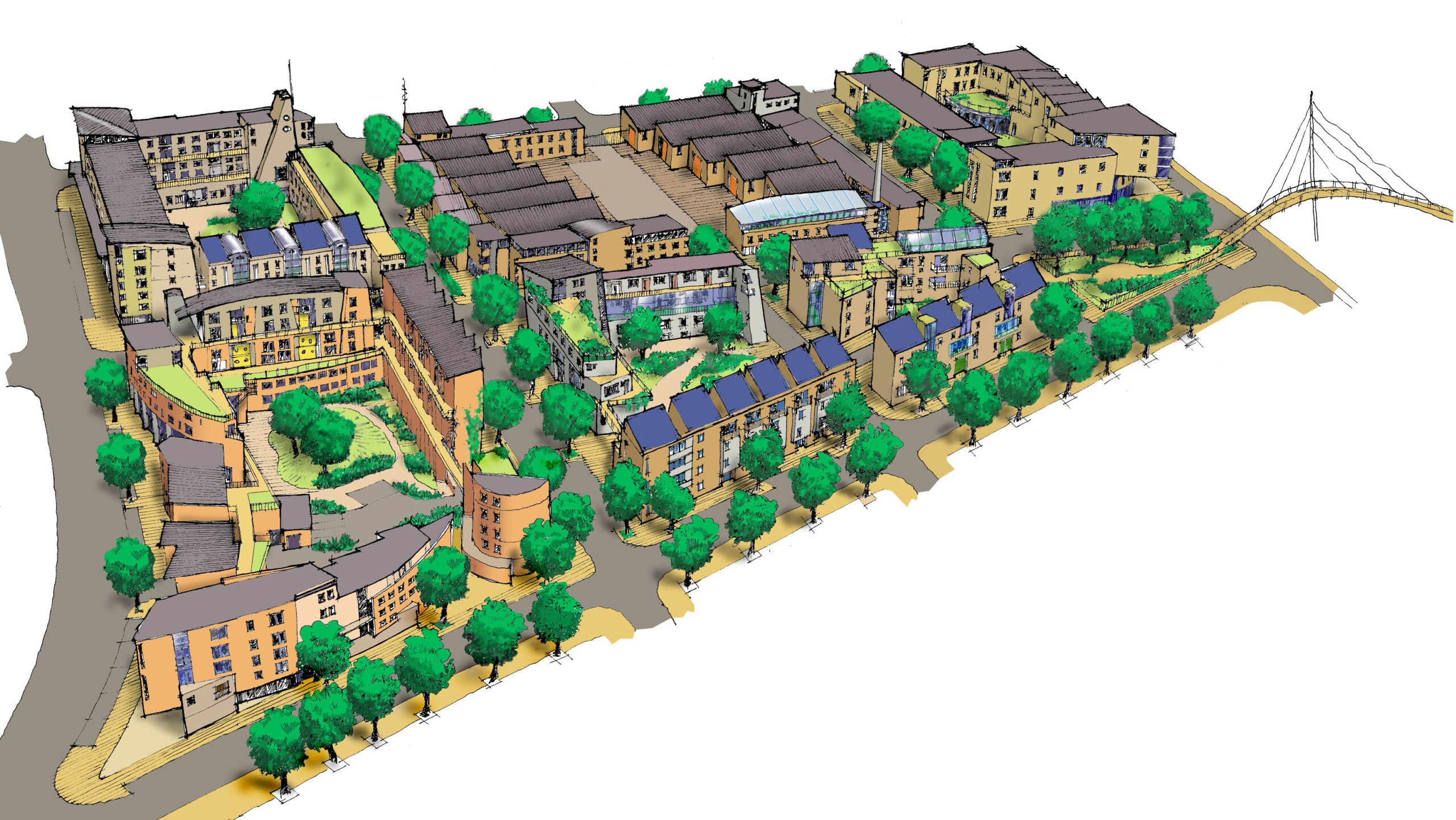
Howard Bernstein was keen to move quickly and for a period the Hulme Guide to Development was applied across the whole of the city. Charlie and I were asked to run training sessions to help the planners understand how it should be applied. This allowed time for a panel of architects, academics and developers (plus myself) to be assembled draw up a city-wide design guide which was adopted as Supplementary Planning Policy in 1997. It has been updated a couple of times but is has guided the development of the city ever since.
As the years have gone by the guide has actually become less needed, because developers quickly internalised its message. Indeed Manchester based developers like Urban Splash were ahead of the game and over a relatively short period the quality of development in the city was transformed. Housing schemes that would previously have been designed as suburban cul-de-sacs was turned inside out so that the housing fronted onto a walkable network of streets. Semi-detached housing became terraces and apartments, public buildings opened onto the pavement rather than turning their back on the street, parking was reduced, densities increased and gradually the city’s fractured urban structure was repaired and densified.
Meanwhile in our office in Hulme, URBED was documenting the changing city as a model for research into sustainable models for urban development. This included an early proposal for a zero carbon neighbourhood around the Homes for Change building, research for Friends of the Earth of urban capacity (Tomorrow: a path to Urban Reform) and attitudinal research with Mori for the Urban Task Force (But would you live there?). All of this was written-up by myself and Nicholas Falk in our first book Building the 21st Century Home published by Butterworth Heinemann’s Architectural Press. This is still the best selling of our books with strong sales in the US and even an edition translated into Chinese.
None of this translated into URBED becoming a trusted consultant to Manchester City Council. The Homes for Change Housing Cooperative were seen as trouble-makers and URBED by association was treated with caution. Our research and promotion of what Manchester was doing was broadly positive, but of course not entirely uncritical which went down badly in a city that insisted that their consultants were always on message!
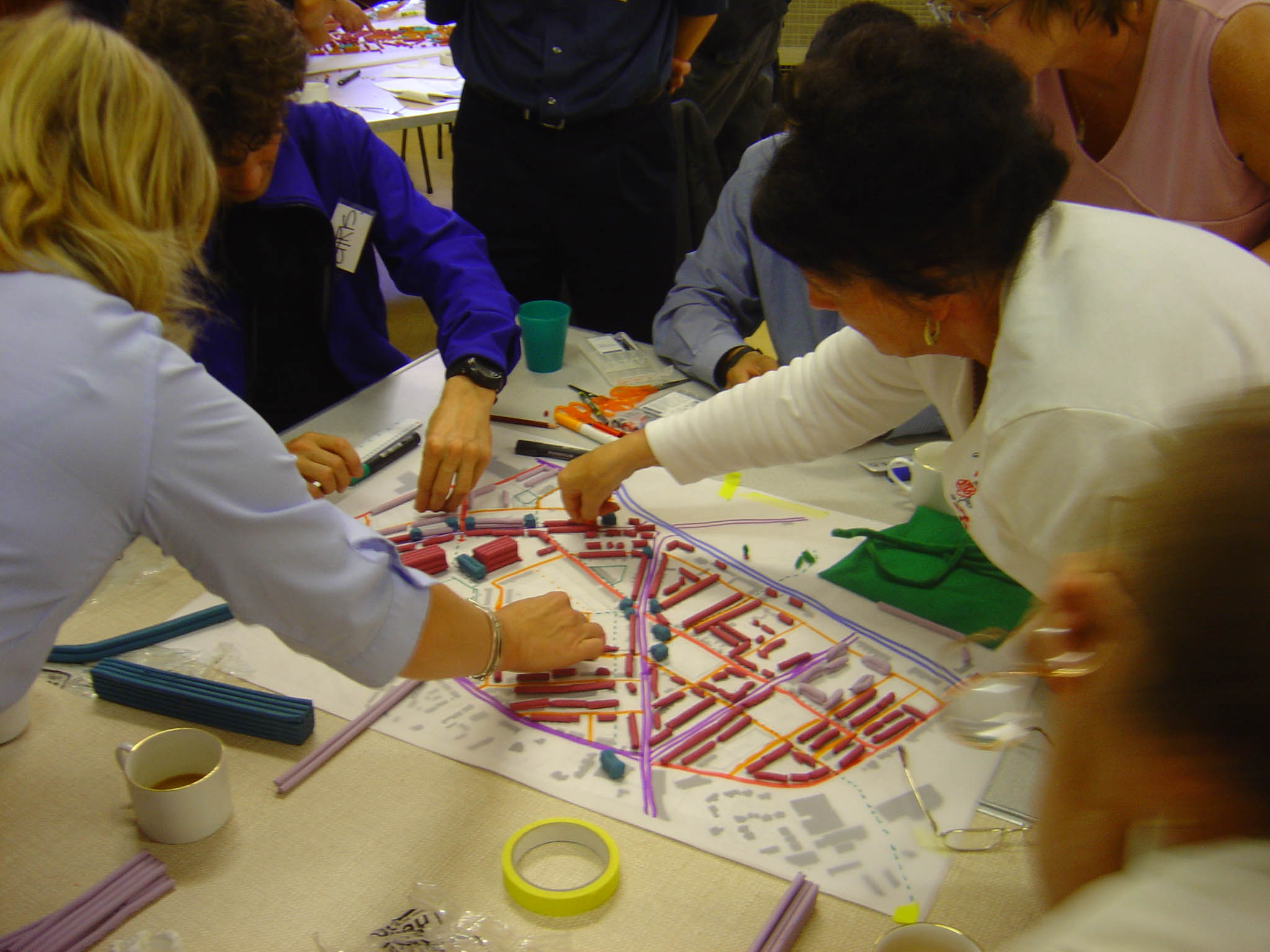
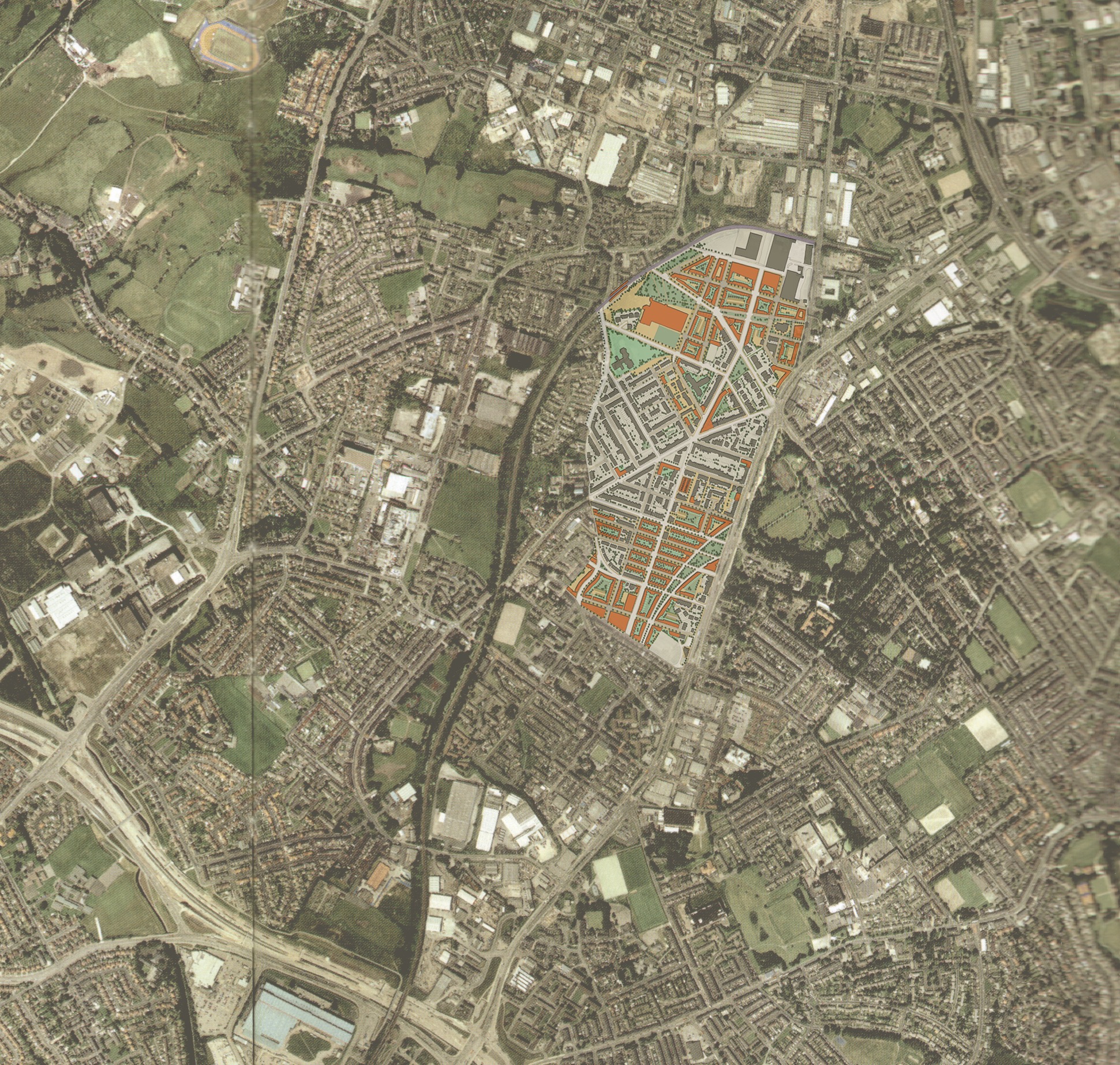
We did however go on to do early work on the Northern Quarter with Urban Space Management, and in Ancoats for the Ancoats Urban Village Trust. We also did a lot of work in other parts of Greater Manchester. In 2004 we undertook the huge Oldham Beyond study which involved a vision for the whole district and master plans for the town centre and a number of neighbourhoods. This was a year after the riots in Oldham and concern was already being expressed that industrial towns like Oldham and Rochdale, where we did a major project the following year, were not benefiting from the growth of Manchester. The Rochdale study sought to apply the SUN model to the regeneration of seven neighbourhoods in the borough using our ‘Design for Change’ community master planning workshops. We also spent more than 10 years working on master plans for Bury including two commissions in the town centre, one on Radcliffe and a further plan for Prestwich. We even master planned the section of Hulme that lies within Old Trafford for the Trafford Housing Trust overseeing the redevelopment and refurbishment of a series of tower blocks.
Then in the late 2010s we were appointed by the Greater Manchester Combined Authority to work on their Spatial Framework. This followed our success in winning the Wolfson Prize and work we had done on the growth of Sheffield. We took the housing and jobs growth numbers and wove then into a narrative for Greater Manchester. This was all about the growth and renaissance of the city, using the Metrolink Tram system to make Greater Manchester a ‘City of Towns’ just as London is a ‘City of Villages’.
Learning from Manchester
So what lessons can we draw from Manchester’s transformation? Our work in the 1990s predicted that forces of demographic change, sustainability and economics would lead to a renaissance of British Cities. Young professionals would opt for urban apartments rather than suburban semis, public transport and active travel would start to supplant car use and economic development would favour urban locations. In 2009 Nick and I updated and republished the book under a new title Sustainable Urban Neighbourhood documenting how our predictions had come to pass and using Manchester as the great example of city renaissance. Since that time it has only gone from strength growing more rapidly that we could ever have imagined.
The message is about people. In the past the government tried to revive declining economies trying to plant new industries. We argued that this was the wrong starting point. The problem was that cities were unpleasant and those with the ability to do so would leave, or at least move out to the suburbs. This created a cycle of decline as cities became concentrations those unable to leave, industry closed and city centres were sustained by people commuting from the suburbs by car.
We argued that all that was required was to reverse what the geographer Tony Champion had called the ‘Population cascade’ away from cities. It we could reverse the flow by getting people to move back into cities through models like the Sustainable Urban Neighbourhood we would set in motion a virtuous circle of population and economic growth. Make cities good places to live, and young, qualified people will come, and employers will follow. This is what has happened in all British cities which have seen their populations growing, although this has unfortunately often been at the expense the surrounding industrial towns. But Manchester really has led the way and shows the power of the Urban Renaissance that we were all talking about back in the 1990s.
David Rudlin is Chair of the URBED Trust and formerly head of URBED’s Manchester Office. He is also a past Chair of the Academy of Urbanism, visiting professor at Manchester School of Architecture and Government Advisor on the Government’s new towns programme.
A great and long standing relationship nicely explained. Really interesting to read this with the ability to look back many years.
So much of what URBED (in particular Nick, Chris, Simon and you David) did in the 80’s and 90’s was ground breaking but has been adopted as standard practice, so it’s nice to see the route you took.
Well done and many congratulations, as well as thanks for contributing so well to the growth of the built environment and renaissance of historic areas and buildings, and of course championing SME development as a key ingredient.